Unsurprisingly, I spend a lot of time talking about Garrison. As soon as I mention that it’s a fantasy game, I’ll usually get the same sort of responses:
“Oh, you mean like Lord of the Rings?” or “Sort of like Game of Thrones, then?”
It’s always tricky because, although my answer is obviously yes, they both have so much baggage attached to them – the books, the media, even the memes – that saying ‘yes’ could mean something completely different depending on who’s asking the question.
If we take a step back (I’m not an expert so take this with a pinch of salt), I think pretty much everyone would agree they are both undeniably beasts of the high fantasy subgenre – though I’d argue they sit at different ends of the scale in terms of moral clarity.
Lord of the Rings is pretty much the blueprint for high fantasy and then Game of Thrones came along and broke all the rules, so I think we can use them both as a solid case study for what I want the world of Garrison to be – or, more accurately, how I want it to feel.
Die (again) Another Day
In order to try and explain how I see death working in this game, I want to look at Boromir’s death in Lord of the Rings and also Ned Stark’s death in Game of Thrones. Spoilers ahead if you’ve been living under a huge pile of rocks.
If we start with Boromir, it’s easy to see his death as a redemptive arc – he sets out with noble intentions to save his people, has a moment of weakness (trying to take the ring from Frodo) then dies saving his friends. He messed up and then atoned for it, dying with honour.
Now let’s look at Ned Stark, where there’s no discernable arc – he tried to do the right thing, was outmaneuvered politically by people using his honour against him and then was executed.
In one world, just as it looks like all hope is lost – something happens and good triumphs over evil. In the other, good might win but the path it takes to get there is unforgiving.
One thing both of those deaths have in common – aside from being portrayed by Sean Bean in film / tv adaptations – is that they are both permanent and meaningful.
Last month I wrote about Garrison being narrative-driven – it’s built around engaging world-level stories where all of the playable characters have their own smaller, more personal stories. Some might be about redemption or revenge – but there’s also characters falling in love, letting go of the past and simply making a new friend.
What I’m really trying to do is invite players to invest in this world and in the characters emotionally – I want people to care about what happens – which I don’t think is possible without consequences. If characters can simply die and be resurrected then, to me, it makes the stories seem… disposable.
Permanent death isn’t a punishment
There are some games that use a single life as a core mechanic. Hardcore mode in the Diablo and Path of Exile games (as well as Minecraft) is perhaps the best known example – you get one life and if your character dies, that’s it. You’re being asked “how good are you?” and if you die, that’s your answer.
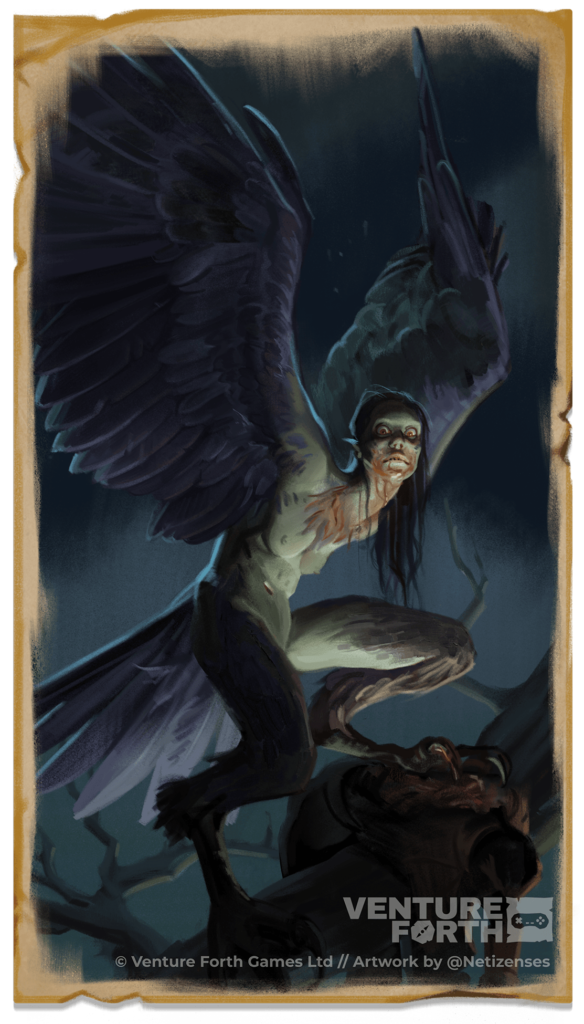
The Darkest Dungeon games have a bit more leeway. If a character dies, although you feel the loss because you’ve put time and effort into making them stronger, your game isn’t over. Progression through the story remains so you can recruit another character, train them up and try again.
In Garrison, the characters are the game. Imagine reading through the chapter where Ned Stark dies; you feel the weight of that moment – then you turn the page to see an author’s note: “Don’t worry, I’ve introduced a new character with a very similar background. Please continue.”
Suddenly a character called Jed Stark appears (Ned’s secret twin brother), starts beating the crap out of the Lannisters and all hell breaks loose. Do you see what I’m getting at? If or when a death occurs in this game, it’ll happen for a reason.
This turned out to be a bit of a head scratcher from a game design perspective. How can you send characters off to fight a dragon and allow for the possibility of failure without it also resulting in their immediate fiery demise?
It all comes down to how missions (read: quests) are presented to the players – in Garrison, characters on missions will either succeed or fail.
A success means they’ve completed the objective (slay the dragon) and a failure means they haven’t. The reason why they failed could be due to any number of reasons: maybe they got lost on the way and had to turn back, or perhaps they found the dragon but realised they were massively under-prepared and trying to fight it would be a death sentence.
That, to me, seems a lot more in keeping with how people would actually react and respond. It allows us as developers and storytellers to go all-in on the narrative aspect of the game whilst also leaning on the willingness of RPG gamers to suspend their disbelief.
Written in stone
Speaking of disbelief, I am still shooketh over something that happened a couple of weeks ago. We’re currently edging closer and closer to having the prototype fully working (more on that next month!) and, as part of that, we’re trying to figure out the best font to use.
For a long time, I’ve been imagining this game with a font called Benegraphic. As you can see below, it has the right kind of handwritten aesthethic but still remains legible… with a few exceptions. When we first put it into the game, there were some instances of certain letters colliding with one another and not being completely readable on a mobile phone screen.
You might think ‘oh no problem, just change how the letters look’ – legally speaking, that’s simply not on. Can’t do that.
I’d pretty much resigned myself to the fact that we’d need to find another font but thought it’d be worth reaching out to the creater of the font – which came out nearly 25 years ago, by the way – to see if we could get permission to adjust some of the lettering to fit into the game.
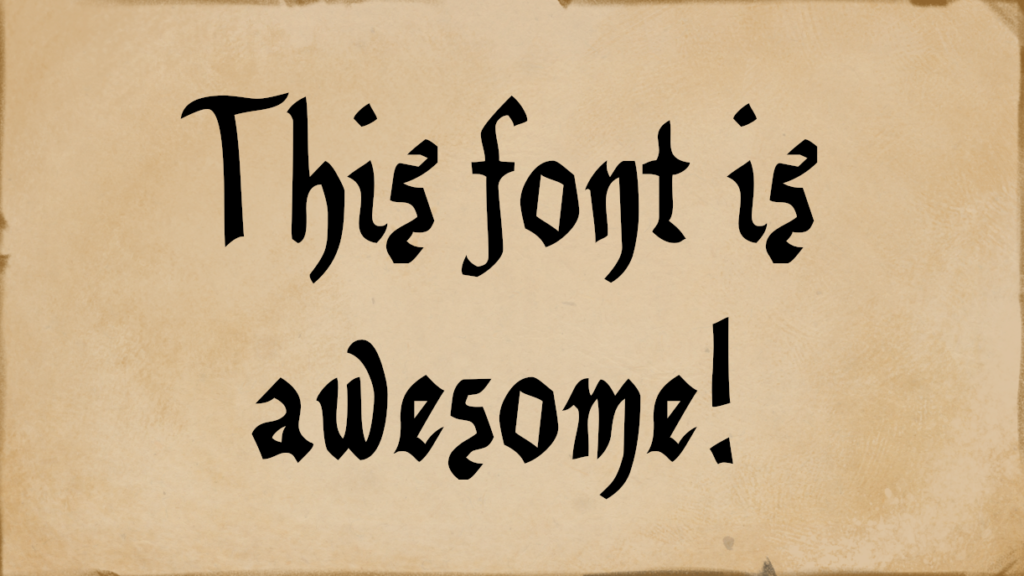
A few days later, I get an email from Brandon – the font’s creator – with an updated font pack that fixes a lot of the problems, includes a heap of new characters and, more importantly, has an updated licence so we can change anything else we need to.
I’ve said to a few people now – I’m not a big believer in signs but this just felt almost too good to be true. We are on the right path with Garrison. Massive thanks to Brandon – who has added Garrison’s devblog to an RSS reader (oldschool) – Benegraphic really is the perfect font for this game.
Community Q & A
Circling back to the topic of pushing up daisies, now seems like a good time to revisit something I mentioned in the January Q & A section – using our profits to take positive action for the planet.
This month’s question comes from my incredible step-mother Jane, who (along with my Dad) have created a beautiful, wildlife-friendly garden. After talking about my plans for a huge nature reserve and knowing my tendency to set myself extremely difficult goals, she hit me with this head scratcher:
Do you think it might be a good idea to start with something a little smaller?
I mean… it would make a lot of sense. For one thing it’d be infinitely more achievable – it’d only take an afternoon to sow a little wildflower meadow and perhaps even plant a couple of trees. I wouldn’t have to buy any land, either – there are plenty of grass verges that’d make the perfect location for some guerilla rewilding.
The flip side of that argument, for me, is that I’d really like to know whatever I did would survive and be protected long after I’m gone.
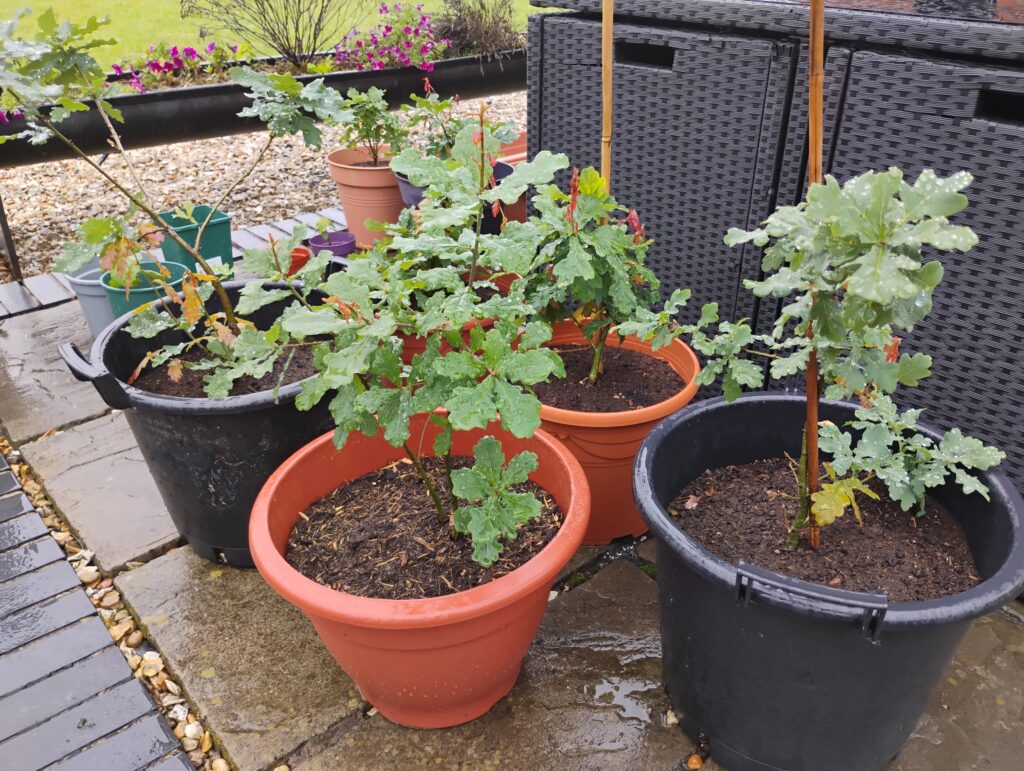
I’ve got some oak saplings that I’ve been nurturing since a squirrel buried them in the little herb garden by my front door. They’re about 5 years old now. It’s not lost on me that I won’t live long enough to see them grow to their fullest potential, however I really love the idea that they could exist for hundreds of years which has ecological and environmental benefits.
Combining both is probably the best way forward. Doing something small now and working towards something bigger in the future. My first attempt at planting wildflowers was… let’s just call it a learning experience. I spent hours raking all the grass out of a patch of my garden, sewing seeds and keeping the soil watered and I have exactly one – yes, one – wildflower to show for it.
I know I said doing something small but that’s not exactly what I had in mind!
We’ve got some pretty big game development progress to share next month – I’d write about it now but there’s a lot of things we still need to finish off. For now I’ll leave you with one word: prototype.
Cheers, Andrew